Miranda Pérez
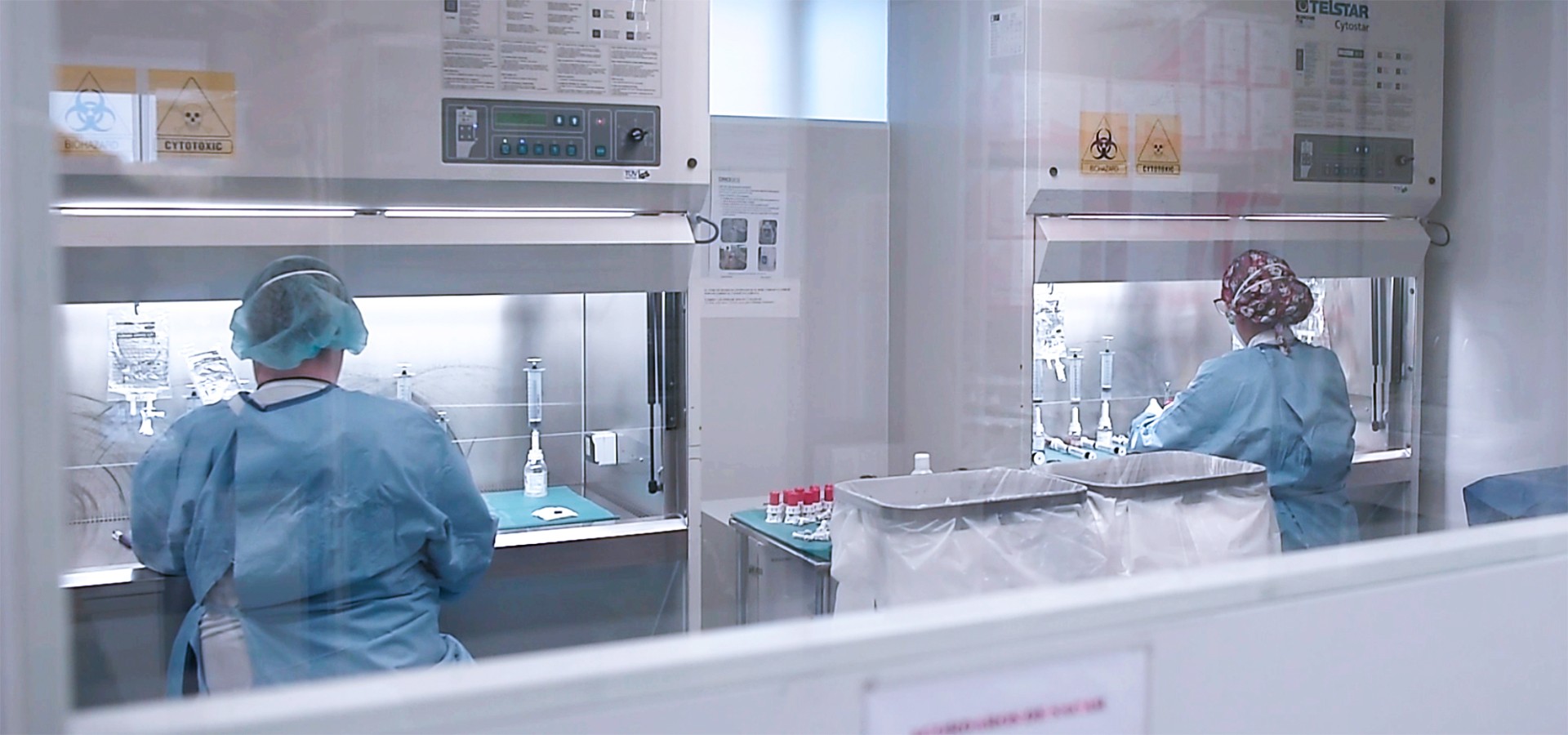
Navarrabiomed and the Hospital Complex of Navarre (CHN) lead the PHARMANAGEN project, an initiative approved by the Government of Navarra in the call for Grants to carry out strategic R&D projects 2018-2020 in the GEMA challenge of Genomics and Advanced Medicine. This call finances cutting-edge projects in challenges and areas of special interest to society and to Navarre. Resolution 16E/2018.

This project is part of the NAGEN Program, which pursues the advancement in the knowledge and use of genomic analysis technology in the public health network of Navarre.
| Coordinator: | Project partners: | |||||
![]() |
|
![]() |
|
Graduated in Medicine and Surgery by the University of Alcalá de Henares (UAH); specialized in Clinical Genetics with European Certificate in Medical Genetics and Genomics (UEMS); and European Doctor in Medicine with the Extraordinary Prize from UAH.
At the clinical level, he is a Specialist Area Physician in Medical Genetics of the Navarre Health Service (SNS-O), and Consultant Clinical Geneticist at the North East and North Cumbria NHS Genomic Medicine Centre in the United Kingdom from 2014-2016.
Leader of the Oncogenetics and Hereditary Cancer research groups at the Government of Navarra's Biomedical Research Centre, Navarrabiomed, and at the Institute of Health Research of Navarra, IdISNA, 2008-2020, and director of the Genomic Medicine Unit at Navarrabiomed since 2016.
As a lecturer, associate professor of the Faculty of Health Sciences, at the Public University of Navarre (UPNA), responsible for the courses "Medicine
Personalized" in the degrees of Biotechnology, Sciences, Biomedical Engineering and Data Science, and of the course "Integrated Medicine VI" of the Medical degree
In management and planning in the field of Personalized Medicine, he has been Scientific-Technical Coordinator of the Navarra Personalized Medicine Strategy; secretary of the Personalised Medicine section of the Spanish Association of Human Genetics (AEGH); advisor to the Senate Panel on the National Strategy in Genomic Medicine; member of the Executive Committee of the ICPerMed International Consortium on Personalized Medicine; and participant in the mirror groups
for the 1 Million Genomes (+1MG) initiative of the European Commission.
https://orcid.org/0000-0001-5111-310X
Navarrabiomed and the Hospital Complex of Navarre (CHN) lead the NAGENCOL project, an initiative approved by the Government of Navarra in the call for Grants to carry out strategic R&D projects 2019-2021 in the GEMA challenge of Genomics and Advanced Medicine. This call finances cutting-edge projects in challenges and areas of special interest to society and to Navarre. Resolution 16E/2018.

This project is part of the NAGEN Program, which pursues the advancement in the knowledge and use of genomic analysis technology in the public health network of Navarre.
The direction of the project falls to doctors Ander Ernaga and Juan Pablo Martínez, specialist from the Service of Endocrinology of the Hospital Complex of Navarre (CHN).
| Coordinator: | Project partners: | |||||
|
|
![]() |
![]() |
The Genomic Medicine Unit aims to implement whole-genome sequencing (WGS) technology within the public healthcare network as a clinical, research, and development tool associated with precision medicine in Navarra. Originating from research projects funded by the Department of Industry of the Government of Navarra, this group consists of internal resources (Principal Investigators, postdoctoral researchers, genetic counselors, and research support technicians), clinical experts, as well as staff from other Units, Platforms, and project advisors. It currently maintains several main lines of research.
Research lines:
High-cholesterol levels, or hypercholesterolemia, affects nearly 1500-2500 people in Navarra, and less than 20 per cent of them are not aware that they suffer from this condition. Hypercholesterolemia is considered to cause 22 per cent of coronary events, most of which could be prevented with early diagnosis and treatment. The biomedical research centre Navarrabiomed has launched NAGENCOL, a project to address this issue using whole-genome sequencing as a diagnostic tool to offer personalised treatment to patients who suffer from hypercholesterolemia. The project is framed within NAGEN, a global strategy aimed at applying genomic medicine in the Navarra Health System-Osasunbidea (SNS-O).
Currently, hypercholesterolemia poses a real challenge to the public health system, because the life expectancy of untreated patients can decrease by 25 years, and 50 per cent of them are more likely to have a heart attack before the age of 55. NAGENCOL addresses this problem, offering a new model that uses genomic information, together with other clinical and demographic data, to bring precision medicine to individual patients.
This ambitious public health project has a budget of 2 million Euro, contributed by the Department of Economic Development at the Directorate-General for Industry, Energy and Innovation of the Government of Navarra, within the framework of the Genomics and Advanced Medicine project (GEMA) and the Intelligent Specialisation Strategy S3.
The NAGENCOL activities are managed by five strategic partners specialising in clinical practice, scientific and technical services, and research. They include the Navarra Hospital Complex (CHN), Nasertic, Tracasa Instrumental SL and Navarrabiomed as the leader of the study. The project is headed by Dr Ander Ernaga and Dr Juan Pablo Martínez from the Endocrinology Service at CHN.
NAGEN Strategy
Since 2016, Navarrabiomed has been leading the Genomic Medicine Strategy (NAGEN) of the Navarra Health System-Osasunbidea. With the support of the Government of Navarra, Navarrabiomed has since coordinated two strategic projects: NAGEN 1000 (best precision medicine project award winner in 2018) and Pharmanagen.
The two initiatives, along with NAGENCOL, are being used to set up, in the SNS-O patient care units, the infrastructure required for using genomic data as a powerful diagnostic tool and to determine the best personalised treatment for each patient.
Navarrabiomed has led the NAGEN: Navarra Genome 1000 project since 2016. The project focuses on whole genome sequencing for a new approach to rare genetic disorders in the Navarra Health System-Osasunbidea (SNS-O). So far, thanks to collaboration with doctors from 18 medical specialties at the Navarra Hospital Complex (CHN), the study includes data about 400 patients and their relatives, precise diagnoses for 25 per cent patients and identification of possible causes for another 25 per cent.
The patients that are part of the study had not been accurately diagnosed, despite having been treated by several specialists and having taken a large number of traditional tests. Angel Alonso, the coordinator of the project, highlighted the project’s relevance to healthcare services: ‘Making genomic analysis available to the public health system is revolutionary. It means a significant change in the clinical approach to patients with rare genetic disorders.’
Impact on the patient and their family
On the occasion of Rare Disease Day on the last day of February, it is worth mentioning that about 6 per cent of the global population are individuals with rare diseases. In Navarra, their number amounts to 38,000. At present, there are 7000 types of rare diseases, most of them of genetic origin.
In many cases, genetic testing enables the patient and their family to get a deeper knowledge of their condition and its progression, to understand how a genetic disease is inherited and to learn about the risks for other family members. The emotional significance of finding answers to the questions posed by the symptoms – which sometimes have remained unanswered for too long – means putting an end to uncertainty and isolation for most patients with rare diseases.
NAGEN 1000: a pioneering project in Spain
NAGEN 1000 is a ground-breaking project at the national level, placing Navarra at the forefront of genomic analysis and technology. The project was introduced last year at the Senate Presentation of Genomic Studies, whose conclusions were approved in 2019, thus green-lighting the development of a national strategy for personalised medicine.
Currently, the project’s methods, procedures and infrastructure are being transferred to daily clinical practice in SNS-O, to the benefit of the people of Navarra.
NAGEN 1000 is financed by the Economic Development Department at the Directorate-General for Industry, Energy and Innovation within the framework of the Intelligent Specialisation Strategy S3. It is being developed by a consortium made of CHN, Nasertic (a company run by the Government of Navarra), Avantia and Navarrabiomed, leader and coordinator of the project, with the support of the Directorate-General for Information Technology, Telecommunications and Public Information (DIGITIP), and the cooperation of the Centro Nacional de Análisis Genómico (CNAG-CRG) and the Clinical Bioinformatics Research Area into Rare Diseases (CIBERER) of Instituto de Salud Carlos III (ISCIII).
Navarrabiomed - Centro de investigación biomédica
Complejo Hospitalario de Navarra, edificio de investigación.
Calle Irunlarrea, 3. 31008 Pamplona, Navarra, España.