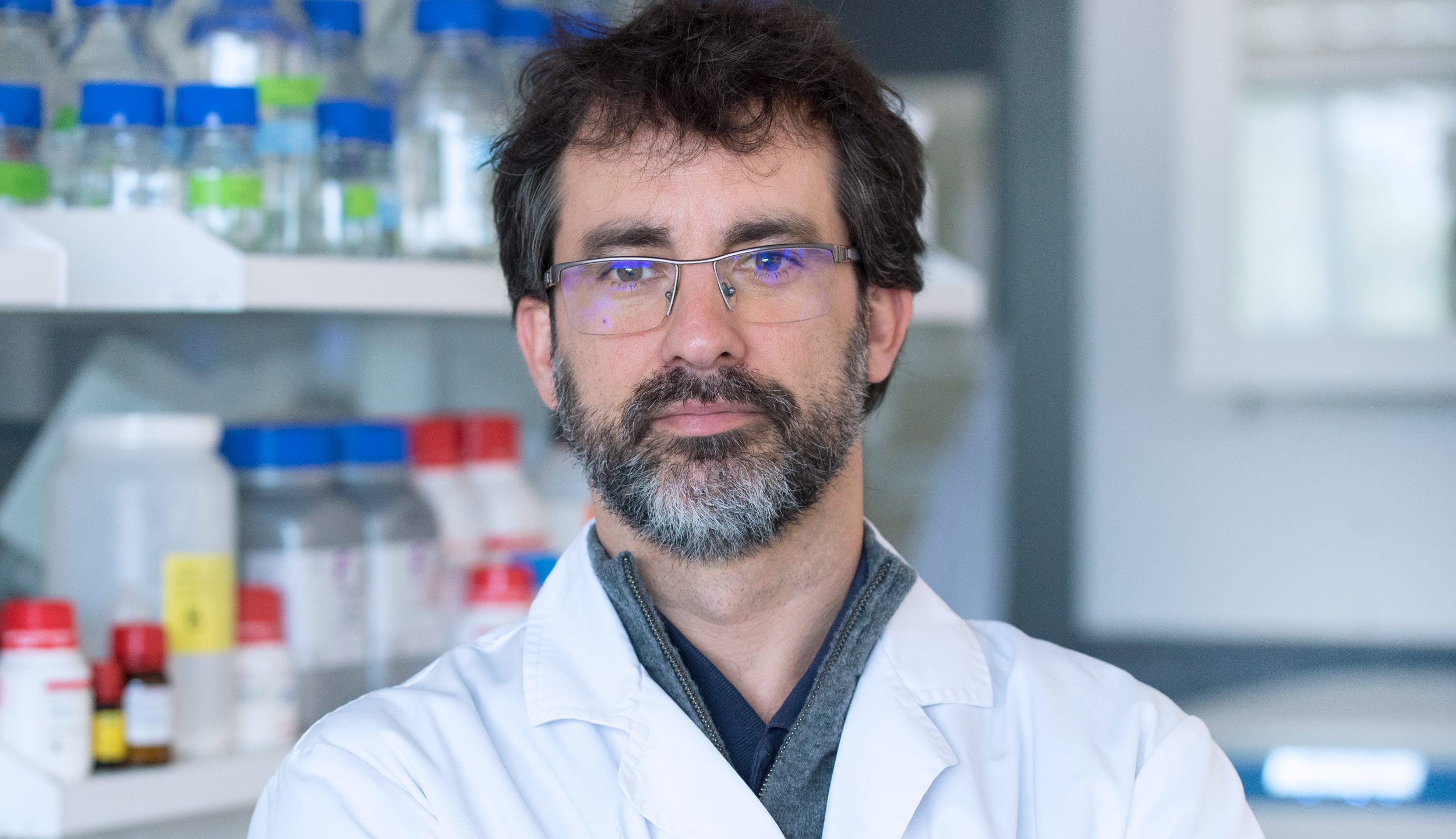

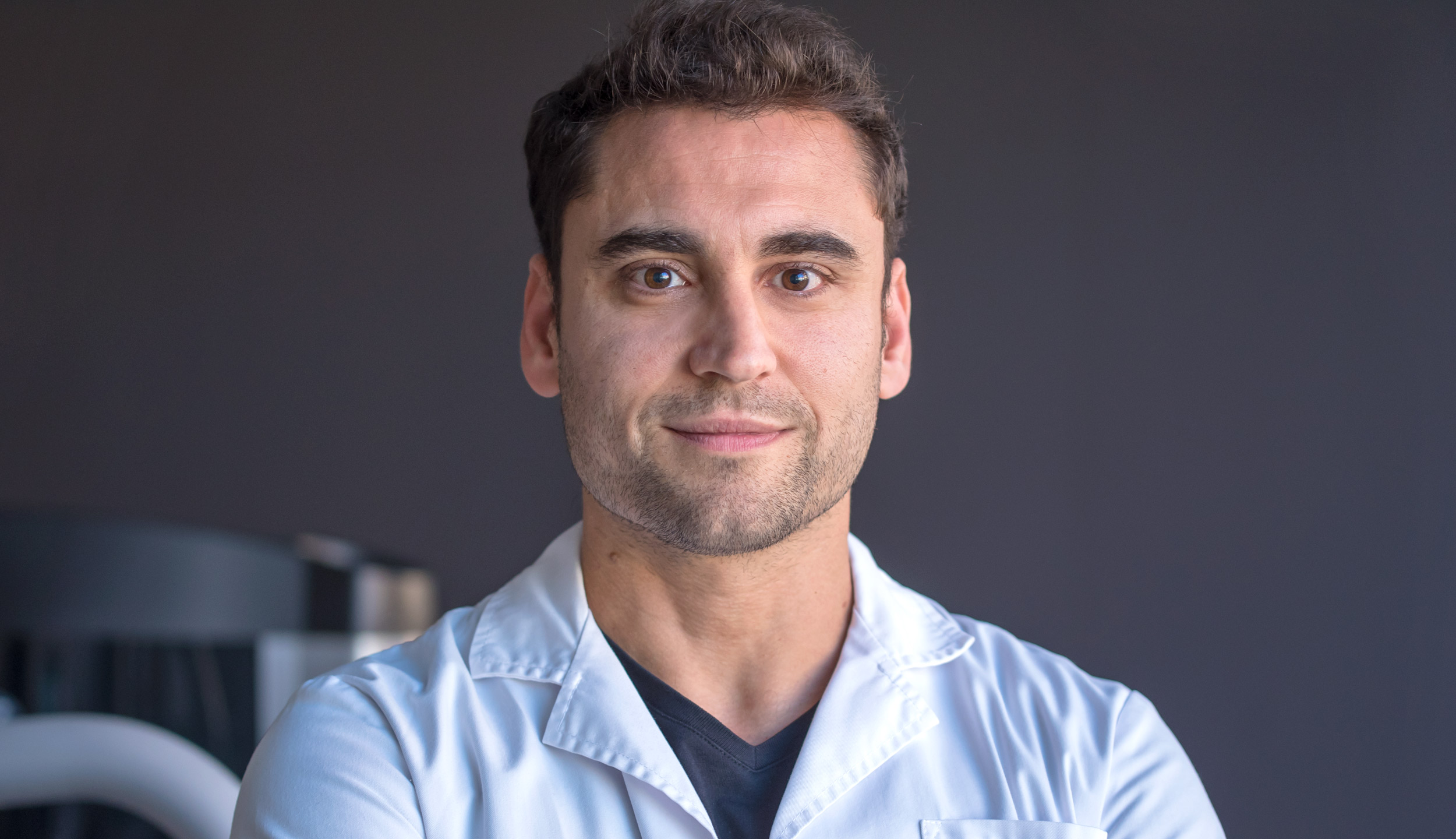
Head of the Unit

García Hermoso

Antonio
‘Promoting active lifestyles from childhood. To build a healthier future’
Antonio García Hermoso

World's Top 2% Scientists (Stanford University)

The researcher holds a Bachelor's Degree in Physical Activity and Sports Sciences (2006) and a PhD in the same discipline (2012) from the University of Extremadura. He has completed postdoctoral stays abroad, mainly in Chile. Between 2019 and 2024, he was a Miguel Servet Type 1 researcher and a consolidated researcher at Navarrabiomed (March-October 2025). He obtained the i3 Program certification in November 2023. He is currently a Senior Lecturer at the Public University of Navarra.


In leadership and scientific independence, he has supervised eight doctoral theses rated with Very Good Cum Laude. He has also obtained competitive contracts for training pre- and postdoctoral students, including Caixa's INPhINIT program and a PFIS predoctoral contract from the Carlos III Health Institute.


He has published 320 articles in peer-reviewed indexed journals, of which 60% are open access and have received 9,489 citations, placing him in the top 2% most cited according to the Stanford ranking. In 50% of his works, he has held prominent positions as corresponding author, first author, or last author. His average Field-Weighted Citation Impact is 2.08 (2.45 as first author). His h-index is 49 on Scopus and 46 on the WOS.


He has served as an external reviewer for organizations such as CONICYT of Chile and the Health Research Council of New Zealand. He is an expert reviewer for the FWO Review College of Belgium and the Swiss National Science Foundation. He has served as Principal investigator of two projects funded by the Carlos III Health Institute.
 

Área de investigación
Unidad o grupo de investigación
Tipo de investigador
Vídeo
Navarrabiomed
Tipo de investigación
Unidad de investigación

Martínez Velilla

Nicolás
We work to improve the quality of life of older adults.
Nicolás Martínez Velilla

Head of the Geriatrics Department at the University Hospital of Navarra (HUN), Scientific Director of the Navarra Institute for Health Research (IdiSNA), Professor at the Public University of Navarra (UPNA), at the University of Navarra (UNAV) and at the European Academy of Geriatric Medicine (EAMA).

Gradurated in Medicine and Surgery from the University of Navarra (UNAV) in 1996, completed surgical residency training in England (Colchester General Hospital – 1997), specialist in Geriatrics (Getafe University Hospital - 2002) and PhD from UPNA (2008). Postgraduate Expert in Probability and Statistics from UNED, expert in Health Services Research at the University of Alcalá, expert in Promotion and Management of European R&D Projects and expert in Advances in Health Systems Management.

Member of the CIBER of frailty and healthy aging of ISCIII and of the Board of the European Academy of Geriatric Medicine. Spanish representative to the European Union Geriatric Medicine Society and Vice President of the Spanish Society of Geriatrics and Gerontology.

In the field of research, he has authored 214 scientific publications. I have participated in 26 research projects at regional, national and European levels, where we recently led a European project within the SUDOE call. He has participated in more than 40 international conferences and more than 80 national ones that have allowed me to present results of these investigations.
 
He serves as Editor-in-Chief of the Spanish Journal of Geriatrics and Gerontology (REGG), a consultant and reviewer for various journals at an international level, and an evaluator of national and international Research Projects. I have supervised 8 doctoral theses and I currently have 9 in development.
 

Área de investigación
Unidad o grupo de investigación
Tipo de investigador
Vídeo
Navarrabiomed
Tipo de investigación
Unidad de investigación
Tesis dirigidas defendidas
Marta Gutiérrez Valencia
Pharmacological treatment optimization in older patients.
Mikel López Sáez de Asteazu
Effects of physical exercise intervention on functional and cognitive decline in geriatric hospitalized patients.

Arozarena Martinicorena

Imanol
‘Reorganizing tumor metabolism to achieve more effective therapies’
Imanol Arozarena Martinicorena

Imanol Arozarena completed his PhD in Dr. Piero Crespo's laboratory at the University of Cantabria, where he studied the RAS/MAPK pathway. He subsequently, pursued postdoctoral research at the Institute of Cancer Research in London (2006-2009) and at the University of Manchester (2010-2014), where he worked on melanoma skin cancer in the laboratories of Dr. Richard Marais and Dr. Claudia Wellbrock. During this period, Dr. Arozarena focused on the mechanisms of metastatic dissemination and resistance to targeted therapies of tumor cells. After two years working as a professor and Principal Investigator at the University of Huddersfield, he established the Cancer Signaling Unit at Navarrabiomed where he continued his research on melanoma. In the last 8 years he has also developed other research lines focused on brain tumors such as glioblastoma multiforme and metastatic breast cancer. Currently, the Cancer Signaling Unit focuses on investigating the molecular mechanisms and metabolic adaptation that tumor cells develop in response to therapies commonly used in clinical practice such as radiotherapy and immunotherapy.

Área de investigación
Unidad o grupo de investigación
Tesis en curso

Prueba tesis en curso

Tipo de investigador
Vídeo
.
iGLIOME project
Imanol
Arozarena Martinicorena
Head of the Unit
Navarrabiomed
Tipo de investigación
Unidad de investigación

Beruete Díaz

Miguel
‘We break natural limits until reaching ultrasensitive sensors’
Miguel Beruete Díaz

Full Professor at the Public University of Navarre (UPNA) and leader of the Multispectral Biosensing Group at Navarrabiomed, my research career focuses on the development of disruptive devices based on metamaterials and photonics. With more than 160 international publications (104 in Q1 and 27 in D1) and more than 8,000 citations on Google Scholar, I have significantly contributed to the advancement of photonics and terahertz sensors through metasurfaces.

Since 2017, I lead the Multispectral Biosensing Group at Navarrabiomed, where we explore new strategies for the development of terahertz sensors applied to biomedical detection. Our research combines metamaterials and nanotechnology to improve early diagnosis and monitoring of diseases, integrating advanced approaches in photonics and biosensing.

Throughout my career, I have led 49 research projects (serving as Principal Investigator on 15 of them) and 25 research contracts, favoring technology transfer through industrial collaborations and international patents. I have supervised 9 doctoral theses (and currently supervise 3 additional PhD theses) and participated in scientific milestones such as the first worldwide demonstration of a metaprisma in THz, advances in cloaking layers, and the development of graphene-based devices.

Among my recognitions are the UPNA Prize for Research in the Area of Exact, Biological, Medical and Technological Sciences (2023) and my inclusion in the top 2% of most cited scientists in the world according to Stanford University (2020–2024). My commitment remains the development of innovative technologies in biosensing and photonics, with a focus on biomedical applications that can positively impact society.
 

Área de investigación
Unidad o grupo de investigación
Tesis en curso

Codirectores: Miguel Beruete e Iñigo Ederra
Universidad: Public University of Navarre 
Facultad/escuela: Escuela Técnica Superior de Ingenieros Industriales y de Telecomunicación
Año:      Calificación:

Tipo de investigador
Vídeo
EITB
La invisibilidad a la vista
Miguel
Beruete Díaz
Head of the Unit
Navarrabiomed
Tipo de investigación
Unidad de investigación
Tesis dirigidas defendidas
Dayan Pérez Quintana
Diseño de antenas de banda de terahercio basadas en metasuperficies.
Alexia Moreno Peñarrubia
Aplicación de la tecnología de sub-milimétricas y THz en espectroscopia y generación de imágenes en los sectores aeroespacial, seguridad, bio, médico, agro y farmacéutico.
Unai Beaskoetxea Gartzia
Leaky Wave Antennas, Plasmonics and Metamaterials in the Terahertz.
Pablo Rodríguez Ulibarri
Metamaterials and Extraordinary Transmission structures applied to microwave, millimeter and terahertz waves devices.
Bakhtiyar Orazbayev
Advanced metamaterials for high resolution focusing and invisibility cloaks.
Víctor Pacheco Peña
Metamaterials and Plasmonics applied to devices on periodic structures at high frequencies: Microwaves, Terahertz and Optical range.
Víctor Torres Landívar
Plasmonics and Metamaterials at Terahertz Frequencies.
Miguel Navarro-Cía
Extraordinary transmission and geometrically-induced modes for metamaterials: from underlying physics to technological applications.

Gómez Fernández

Marisol
Theoretical and applied machine learning: explainability, probabilistic ML, multimodal learning
Marisol Gómez Fernández

Marisol Gómez holds a Bachelor's degree in Mathematics (U. Salamanca) and a Ph.D. in Mathematics (Public University of Navarra, UPNA). She also completed a University Specialization Program in Machine Learning at UPNA. She is currently a Full Professor in the research field of Algebra.

Marisol Gómez is the PI of the Algebra and Applications Group at Navarrabiomed.

From January 2018 to June 2024, she was the PI and coordinator of the Bioengineering and Health Biotechnologies Area at the Navarra Health Research Institute (IdISNA).

Her current research lines focus on the development of machine learning methods for multimodal information extraction and optimization techniques for processing biosignals.

She is the co-author of more than 90 publications, and has participated in 20 publicly funded research projects. She has co-supervised 8 PhD theses (5 completed, 3 ongoing). She regularly serves as a reviewer for JCR-indexed journals. Her citation metrics are: h-index: 18 (WoS), 20 (Scopus), 22 (Google Scholar).

She is also affiliated with the Institute for Advanced Materials and Mathematics of UPNA, a multidisciplinary research institute bringing together scientists in Mathematics, Physics, Chemistry, and Materials Science.

From August 22, 2019, to June 30, 2024, she held the position of Deputy Director of Strategic Planning and Quality at the Higher Technical School of Industrial, Computer, and Telecommunication Engineering (ETSIIIT) of UPNA. She is also co-leader of Work.

Package 41 ("Interterritorial Innovation Interfaces") in the UNITA European University alliance.

She is co-founder of two UPNA spin-off companies: Movalsys S.L., focused on multimodal analysis of human movement for health and sports applications and Tairel Data S.L., which offers AI-based personalized solutions and advanced data processing services.

She actively participates in science outreach activities, especially through the Women in Science and Technology Chair at UPNA, supported by the Government of Navarra.
 

Área de investigación
Unidad o grupo de investigación
Tipo de investigador
Navarrabiomed
Tipo de investigación
Unidad de investigación

López Sagaseta

Jacinto
"Structure and molecular interactions, keystones in biomedicine"
Jacinto López Sagaseta

Jacinto López Sagaseta has led the Protein Crystallography and Structural Immunology Unit since its creation in 2019. The Unit specializes in the experimental determination of the molecular structure of proteins and their interactions with other biological components (proteins, peptides, lipids, DNA, etc.).

He has been a researcher at international centers such as the University of Chicago
(2009-2015), Novartis Vaccines (2015-2016) and GSK Vaccines (2016-2017), where he led the experimental resolution of numerous TCR-antigen-MHC complexes and antibody-antigen. In 2010 he obtained a postdoctoral fellowship from the Ministry of Science, Innovation and Universities (Ref. 1046777, National Program for Mobility of Human Resources of the National Plan for R&D&I 2008-2011), in 2015 he was awarded a Marie-Curie fellowship by the European Commission (Grant 659615), and in 2018 with the Ramón y Cajal Program, from the Ministry of Science and Innovation (RYC-2017-21683). Among his recognitions, he holds the I3 accreditation from the Ministry of Universities and the accreditation as a Contracted Professor by Aneca. He is an invited reviewer for scientific journals as well as for the State Research Agency (AEI). The results of his research have been published in specialized journals, with him as lead author in articles published by Nature Communications, Blood, PNAS or EMBO Journal, as well as in immunology textbooks (Immunobiology, 9th Edition, Encyclopedia of Immunobiology, 2016).
 

Área de investigación
Unidad o grupo de investigación
Tipo de investigador
Navarrabiomed
Tipo de investigación
Unidad de investigación

López Andrés

Natalia
‘Translational research, our trademark’
Natalia López Andrés

Dr López-Andrés has dedicated her scientific career to Biology, graduating from this degree at the University of Navarra. She decided to specialize in cardiovascular sciences doing the doctorate at the Division of Cardiovascular Sciences of the University of Navarra, obtaining the PhD in 2006. She held a postdoctoral position at the Division of Cardiovascular Sciences in the Centre for Applied Medical Research from 2006 to 2008. During these years she worked with a multidisciplinary research team specialized in the study of heart failure. This expertise enabled her to occupy a postdoctoral position at the INSERM, in the unit U961, from 2008 until 2013.

This unit focuses its research in the mechanisms of action and the diagnostic and therapeutic aspects applied to the field of cardiovascular stiffness-fibrosis and hypercoagulability. In 2013, she obtained the competitive Miguel Servet contract that allowed her to build a new research group in Navarrabiomed, the Translational cardiovascular research group, in the interface between clinical and basic research. Over the past 12 years her laboratory has investigated the role of Aldosterone/mineralocorticoid receptor and its biotargets in heart valve diseases.

The Program is part of the “Cardiovascular and Renal Diseases Area” of the Health Research Institute of Navarra (IdiSNA). As part of her research career, she has effectively developed contacts and collaborations in other countries and universities to enhance her knowledge and capabilities.

She has participated as a principal investigator in the European FP7 project Fibrotargets, as a work package leader in the COST action ADMIRE and as principal investigator in national (Spanish and French) and regional projects. 

Área de investigación
Unidad o grupo de investigación
Tipo de investigador
Navarrabiomed
Tipo de investigación
Unidad de investigación

Lasa Uzcudun

Iñigo
‘Together, we can accomplish things that would be impossible if we were alone’
Iñigo Lasa

World's Top 2% Scientists (Stanford University)


I completed my undergraduate studies in Biological Sciences at the University of Navarra in 1988 and earned a PhD in Microbiology from the Center for Molecular Biology (CSIC-UAM) at the Autonomous University of Madrid in 1992. I then conducted postdoctoral research for three years in Professor Pascale Cossart’s laboratory at the Pasteur Institute, studying the genetics of Listeria monocytogenes actin-based motility. In 1997, I joined the Public University of Navarra (UPNA) as Professor of Microbiology and established my laboratory at the Center for Agrobiotechnology, focusing on the genetics of bacterial biofilm formation. I became Full Professor in 2008 and served as Director of the Center (2010–2013) and later as Director of Navarrabiomed (2015–2022).

As principal investigator, I have led nine consecutive projects funded by the Spanish Ministry and six European Union projects under the 6th, 7th, and Horizon Europe Framework Programmes. I have supervised 20 PhD students and 12 postdoctoral researchers. My current research focuses on biofilm formation in pathogenic bacteria, two-component sensory systems in Staphylococcus aureus, RNA-based transcriptional regulation, and recombinant phage development. My main contributions include identifying Bap proteins involved in amyloid-mediated biofilm formation, describing overlapping mRNA-based regulation processed by RNase III, demonstrating dispensability of a key two-component system for S. aureus growth, and defining the non-contiguous operon. In 2011, I co-founded RECOMBINA S.L., a biotechnology company focused on genetic engineering and veterinary vaccines.

Unidad o grupo de investigación
Tipo de investigador
Navarrabiomed
Tipo de investigación
Unidad de investigación
Tesis dirigidas defendidas
Saioa Burgui Erice
Evaluation of new strategies to combat Staphylococcus aureus biofilm mediated infections in medical devices.
Maite Echeverz Sarasua
Insights into c-di-GMP signalling and the PGA exopolysaccharide biological functions using Salmonella as a model organism.
Agustina Taglialegna
Study of the molecular mechanisms underlying Bap-mediated cell-cell interactions in Staphylococcus aureus.

Escors Murugarren

David
‘Development of new immunotherapies against cancer’
David Escors Murugarren

World's Top 2% Scientists (Stanford University)

Dr. David Escors Murugarren is a Spanish researcher born in Pamplona, Navarre, in 1974. He earned a degree in Biological Sciences from the University of Navarre and completed his doctoral thesis at the Autonomous University of Madrid in 2002. His thesis focused on the structure of the coronavirus of transmissible porcine gastroenteritis and the encapsidation of its genome. After completing his doctorate, he continued his postdoctoral training as a Marie Curie researcher at University College London (UCL), where he collaborated on research about lentiviral vectors and their use in cancer immunotherapy. In 2013, he returned to Spain and joined the Navarrabiomed Research Center, where he leads the immunomodulation group. Dr. Escors specializes in oncological immunotherapy and has published more than one hundred articles, reviews, and book chapters. His research focuses on the development of new immunotherapies for solid tumors, and he has been awarded the V SER Navarra Award (Innovation Category) for his work in research on the

SARS-CoV-22.
(me dice copilot que a ver si no es : SARS-CoV-2) 
 

Área de investigación
Unidad o grupo de investigación
Tipo de investigador
Navarrabiomed
Tipo de investigación
Unidad de investigación
Tesis dirigidas defendidas
María Gato Cañas
Study of two barriers in melanoma immunotherapy: Myeloid derived suppressor cells and PDL1/PD1 interaction.
Alessio Lanna
Molecular Tuning of Telomerase Activity in Senescent Human T cells.
Christopher Bricogne
Plasma membrane dynamics regulating the PD-1: PD-L1 pathway.
Therese Maria Liechtenstein
Lentivector-based cancer immunotherapy silencing PD-L1 and modulating cytokine priming; Development of ex vivo myeloid-derived suppressor cells to assess therapeutic efficacy.
Mehdi Baratchian
Understanding the mechanisms of NF-kB activation by viral oncoproteins vFLIP and Tax.
Holly Nicole Stephenson
Innate Immune Recognition of Glycosylated Surface Determinants of Campylobacter jejuni.

Albéniz Arbizu

Eduardo
Advancing non-invasive early diagnosis
Eduardo Albéniz Arbizu

Eduardo Albéniz holds a medical degree (Medicine and Surgery) from the University of Navarra (1998) and specialized in Digestive System (MIR) at Ramón y Cajal Hospital in Madrid (1999-2003). Professionally, he has worked at HU Angers-France (2003), Hospital San Rafael in Madrid (2003-2004), and Complejo Hospitalario Universitario de Albacete (2004-2009). Since 2009, he has worked as a Consultant Gastroenterologist in the Endoscopy Unit of the Digestive System Service at the University Hospital of Navarra (HUN). Furthermore, since 2018 he combines his clinical activity with research thanks to several fellowships for Intensification (50% research activity; 50% clinical activity). These fellowships enabled him to complete his PhD in Medicine at the Public University of Navarra in 2021.


Dr. Albéniz has coordinated since 2013 the national Endoscopic Resection group of the Spanish Society of Digestive Endoscopy (SEED), whose main work is to promote national and international collaborative research in this field.
 
Since 2023, he has been a Member of the Board of Directors and Chair of the society´s scientific Committee. In addition, he coordinates the research activity of the Digestive System Service, the Resection and treatment unit for digestive motor disorders, and the CSUR functional unit for achalasia of the HUN.

Throughout his career, he has been a tutor for residents and, currently, he is directing 3 doctoral theses. He has participated in 38 research projects, 22 of them as PI and 10 of them awarded with competitive funding (SEED, ESGE, SVNPD, MEDTECH Navarra and ISCIII). He has also collaborated in the development of the European ESGE (European Society of Gastrointestinal Endoscopy) guidelines on Endoscopic Mucosal Resection and on training in POEM (Per-Oral Endoscopy Miotomy). As a result of this work, Dr. Albéniz is the author of more than 90 scientific publications in journals with a high impact index.
 

Área de investigación
Unidad o grupo de investigación
Tipo de investigador
Navarrabiomed
Tipo de investigación
Unidad de investigación