Propio

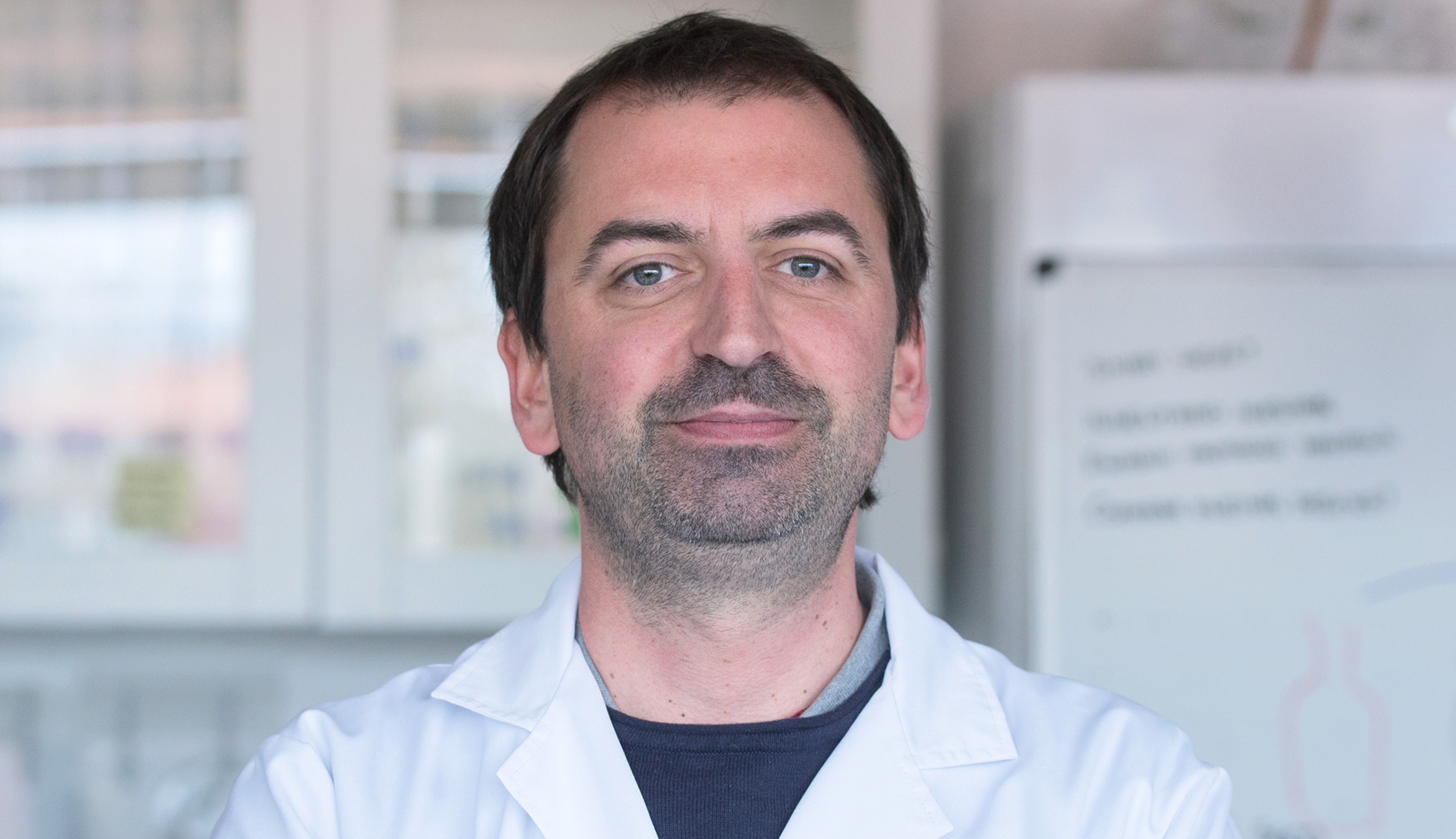
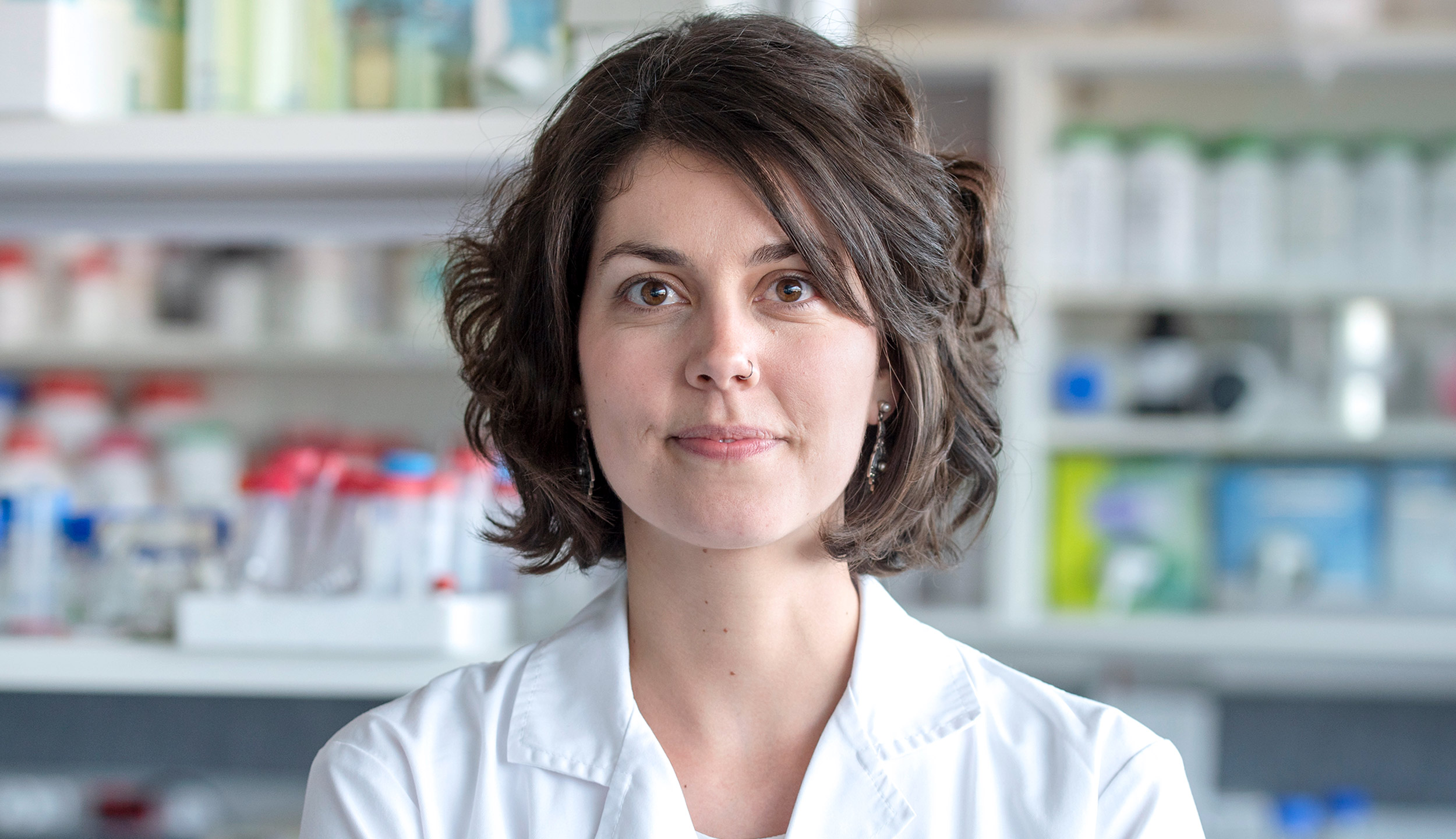
Ramírez Huerto

Natalia
‘Success in life is not measured by achievements but rather by the obstacles you overcome’
Natalia Ramírez Huerto
Área de investigación
Otro cargo
Technical Management and Quality Assurance Area
Tipo de investigador
Vídeo
Navarrabiomed
Tipo de investigación
Servicio
Service type
Scientific-Technical Services
Tesis dirigidas defendidas
Antonio Viúdez Berral
Expresión inmunohistoquímica de MGMT (o(6)-metilguanina-DNA-metiltransferasa), NDRG-1 (n-myc downregulated gene-1) y PHLDA-3 (pleckstrin homology-like domain, family a, member 3) y su correlación con el silenciamiento por metilación en pacientes interveni
Miriam Ciáurriz Gortari
Immune reconstitution against Cytomegalovirus in allogeneic hematopoietic stem cell transplant recipients.
Lorea Beloki Bes
Evaluation and optimization of immunomagnetic methods for the purification and selection of CMV-specific cytotoxic T lymphocytes from G-CSF primed peripheral blood mononuclear cells for adoptive immunotherapy.

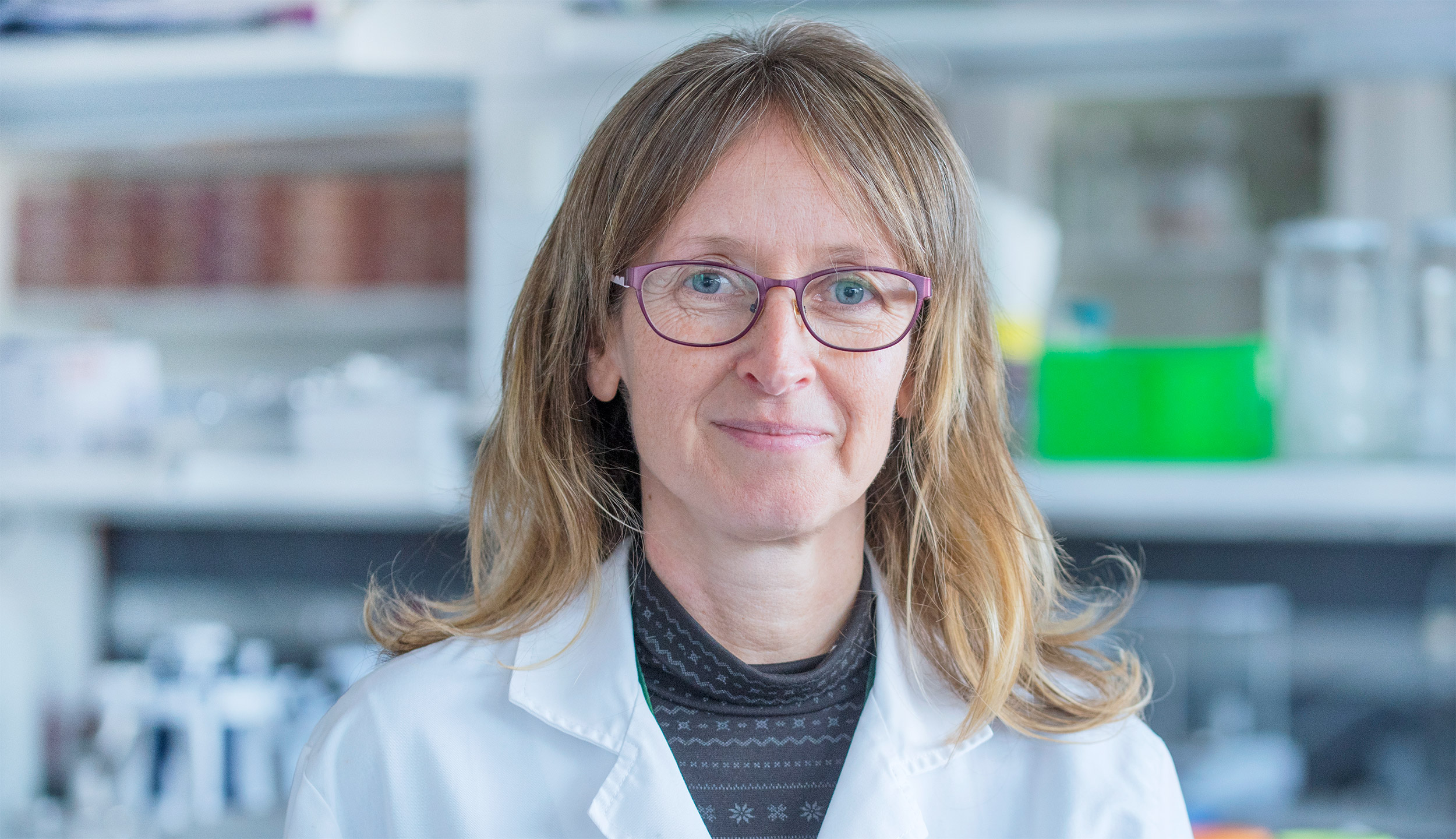
Mendioroz Iriarte

Maite
DNA methylation in neurodegenerative diseases such as Alzheimer’s. #NeuroEpigenTransforms
Maite Mendioroz Iriarte

Maite Mendioroz Iriarte holds a Degree in Medicine and Surgery from the University of Navarra (1996) and specialized in Neurology (MIR) at Donostia Hospital. She completed her training at the Vall d’Hebron Hospital-Institut de Recerca (2006–2010), where she defended her doctoral thesis cum laude from the UAB (2010). Between 2010 and 2012, she specialized in neuroepigenetics as a Visiting Scientist at Columbia University (New York). Since 2010, she has been part of the medical team in the Neurology Department at the Hospital Universitario de Navarra (HUN), where she served as Research Coordinator between 2016 and 2022. Since 2013, she has led the NeuroEpigenetics Unit at Navarrabiomed, combining her clinical work with research on neurodegenerative diseases, focusing on biomarkers and therapeutic targets.

She has participated in 26 research projects, serving as principal investigator in 11 (6 national and 5 regional). Her work has led to 107 scientific publications. She belongs to the ISCIII's RICORS network for cerebrovascular diseases and the DEGESCO national consortium.

She has mentored 12 neurology residents (2014–2019) and directed 5 doctoral theses, 5 master's theses, and 5 bachelor's theses. Furthermore, she was an associate clinical professor at UNAV (2013–2022). Since 2022, she has been a member of the Steering Committee of the EDONA Doctoral School at UPNA.

Since 2022, she has been a board member of the Dementia Study Group of the Spanish Society of Neurology. She has evaluated projects for the State Research Agency and participated in the Technical Evaluation Committees (CTE) of the ISCIII as a panel adjunct. Notable among her awards and honors are the Alberto Rábano National Award (2011), her appointment as an Honorary Member of the European Council of Doctors (2018), the TELVA Award for Sciences (2018), and her inclusion in the Top 100 Women Leaders in Spain ranking (2021).

Additionally, she served as Director of Navarrabiomed-Miguel Servet Foundation between 2022 and 2024, consolidating her career as a leading figure in neuroscience and epigenetics research and management.


Área de investigación
Unidad o grupo de investigación
Tipo de investigador
Vídeo
Imagen Ibeas
Proyecto IBEAS - PLUS
Maite
Mendioroz Iriarte
Head of the Unit
Navarrabiomed
Tipo de investigación
Unidad de investigación

Alonso Sánchez

Ángel
‘Personalised medicine and genomic individuality’
Ángel Alonso Sánchez

He holds a Degree in Medicine and Surgery from the University of Alcalá de Henares (UAH), specialized in Clinical Genetics with the European Certificate in Medical Genetics and Genomics (UEMS), and obtained a European PhD in Medicine with an extraordinary doctorate award from the UAH.

At a clinical level, he is an Attending Physician in Medical Genetics for the Navarre Health Service (SNS-O) and served as a Consultant Clinical Geneticist for the North East and North Cumbria NHS Genomic Medicine Centre in the United Kingdom between 2014 and 2016.

He was the leader of the "Oncogenetics and Hereditary Cancer" research groups at Navarrabiomed (Biomedical Research Center of the Government of Navarra) and IdiSNA (Health Research Institute of Navarra) from 2008 to 2020, and has been the Director of the Genomic Medicine Unit at Navarrabiomed since 2016.

As an educator, he is an Associate Professor at the Faculty of Health Sciences of the Public University of Navarra (UPNA), responsible for the "Personalized Medicine" courses in the Biotechnology, Sciences, Biomedical Engineering, and Data Science degree programs, as well as the "Integrated Medicine VI" course in the Medicine degree program.

In the field of management and planning for Personalized Medicine, he has served as the Scientific-Technical Coordinator of the Personalized Medicine Strategy of Navarra, Secretary of the Personalized Medicine section of the Spanish Association of Human Genetics (AEGH), Advisor to the Senate Committee on the National Strategy in Genomic Medicine, Member of the Executive Committee of the International Consortium for Personalised Medicine (ICPerMed), and Participant in the mirror groups for the European Commission's 1 Million Genomes (+1MG) initiative.


Área de investigación
Unidad o grupo de investigación
Tipo de investigador
Navarrabiomed
Tipo de investigación
Unidad de investigación

Bustince Sola

Humberto
‘The data revolution has arrived, and we have the excellent chance to benefit from it’
investigador

World's Top 2% Scientists (Stanford University)

Humberto Bustince is a Full Professor of Computer Science and Artificial Intelligence at the Public University of Navarra and an Honorary Professor at the University of Nottingham since 2017. He is the principal investigator of the Artificial Intelligence and Approximate Reasoning Group. He is the author or co-author of more than 400 papers, according to the Web of Science, in prestigious international conferences and journals, with nearly 200 of them in first-quartile (Q1) JCR publications. Furthermore, eight of these papers have been among the highly cited papers of the last 10 years according to the Web of Science. He collaborates with top-tier international groups from countries such as the United Kingdom, Belgium, Australia, Germany, Portugal, the Czech Republic, Slovakia, Canada, the USA, and Brazil. He is also the Editor-in-Chief of the online magazine Mathware&Soft Computing of the European Society for Fuzzy Logic and Technology (EUSFLAT) and of the journal Axioms. He is a member of the editorial boards of the journals Fuzzy Sets and Systems, Information Fusion, International Journal of Computational Intelligence Systems, and Journal of Intelligent & Fuzzy Systems. He is an IEEE Fellow and a Fellow of the International Fuzzy Systems Association (IFSA), serving as the President of the latter association since August 2023. He has been a member of Jakiunde since 2018.

Among his awards and recognitions, notable honors include the Cross of Carlos III El Noble awarded by the Government of Navarra in 2017, the José García Santesmases National Computer Science Award in 2019, and the EUSFLAT Scientific Excellence Award in 2019.


Área de investigación
Unidad o grupo de investigación
Tipo de investigador
Vídeo
Navarrabiomed
Tipo de investigación
Unidad de investigación
Tesis dirigidas defendidas
Laura De Miguel Turullols
Computing with uncertainty truth degrees: a convolution-based degrees.
Helida Salles Santos
A new class of fuzzy subsethood measures.
Daniel Paternain Dallo
Optimization of image reduction and restoration algorithms based penalty functions and aggregation techniques.
Aránzazu Jurio Munárriz
Numerical information measures for image processing. Magnification and thresholding.
Carlos López Molina
The breakdown structure of edge detection: analysis of individual components and revisit of the overall structure.
José Antonio Sanz
Sistemas de clasificación basados en reglas difusas lingüísticas utilizando conjuntos difusos intervalo-valorados y ajuste de la ignorancia.
Raúl Orduna Urrutia
Funciones de solapamiento y su aplicacion a segmentacion de imagenes.
Miguel Pagola Barrio
Representation of uncertainty by interval-valued fuzzy sets. Application.
Mª de las Nieves Barrenechea Tartas
Image processing with interval-valued fuzzy sets. Edge detection. Contrast.
Fernando Soria de Diego
Axiomatization of v. Young's fuzzy subsethood measures. Construction from aggregation and implication operators. Other indexes.

García Hermoso

Antonio
‘Promoting an active lifestyle from an early age. Building a healthier future’
Antonio García Hermoso

World's Top 2% Scientists (Stanford University)

El investigador posee una Licenciatura en Ciencias de la Actividad Física y del Deporte (2006) y un Doctorado en la misma disciplina (2012) por la Universidad de Extremadura. Ha realizado estancias postdoctorales en el extranjero, principalmente en Chile. Entre 2019 y 2024, fue investigador Miguel Servet Tipo 1 e investigador consolidado en Navarrabiomed (Marzo-Octubre de 2025). Obtuvo la certificación del Programa i3 en noviembre de 2023. Actualmente es profesor Titular en la Universidad Pública de Navarra.

En liderazgo e independencia científica, ha supervisado ocho Tesis Doctorales calificadas con Sobresaliente Cum Laude. Además, ha obtenido contratos competitivos para la formación de alumnos pre y postdoctorales, incluyendo el programa INPhINIT de la Caixa y un contrato predoctoral PFIS del Instituto de Salud Carlos III. 

Ha publicado 320 artículos en revistas indexadas, de los cuales el 60% son de acceso abierto y han recibido 9,489 citas, situándolo en el 2% más citado según el ranking de Stanford. En el 50% de sus trabajos ha ocupado posiciones destacadas como autor de correspondencia, primer autor o último autor. Su Field-Weighted Citation Impact promedio es de 2,08 (2,45 como primer autor). Su índice H es de 49 en Scopus y 46 en la WOS.

Ha sido revisor externo para organizaciones como CONICYT de Chile y el Health Research Council de Nueva Zelanda. Es experto revisor del FWO Review College de Bélgica y del Swiss National Science Foundation. Investigador principal de dos proyectos financiados por el Instituto de Salud Carlos III.

Área de investigación
Unidad o grupo de investigación
Tipo de investigador
Vídeo
Navarrabiomed
Tipo de investigación
Unidad de investigación

Izquierdo Redín

Mikel
Precision Physical Exercise: A key challenge for modern medicine
Mikel Izquierdo Redín

World's Top 2% Scientists (Stanford University)

Mikel Izquierdo is a Full Professor and Deputy Director of the Department of Health Sciences at the Public University of Navarra. Additionally, he is a Professor in the Master's Degree in High Sports Performance of the Spanish Olympic Committee. He served as Head of the Research, Studies, and Sports Medicine Unit of the Government of Navarra (2005–2010), a period during which he participated in the preparation of Olympic athletes in judo, handball, and Basque pelota. He also collaborated with the Liverpool FC and FC Barcelona football teams, with whom he won two UEFA Champions League titles, as well as the Spanish Cup and League.

He has led multiple research projects focused on biomechanics and the neuromuscular system, with a special interest in the effects of resistance and muscle power training on sports performance, aging, frailty, and populations with conditions such as diabetes and obesity.

Currently, he directs the Physical Exercise, Health, and Quality of Life (E-FIT) research group at the Biomedical Research Center of Navarra (NAVARRABIOMED) and is a principal investigator at the CIBER on Frailty and Healthy Aging (CIBERFES) of the Carlos III Health Institute. He has participated in projects funded by the European Commission, such as Mid-Frail (FP7) and DIABFRAIL-LATAM (H2020), and coordinates the European project VIVIFRAIL (www.vivifrail.com) as scientific director.

Since 2018, he has been an external advisor to the World Health Organization (WHO) Clinical Consortium on Healthy Ageing, collaborating on the implementation of physical exercise programs for the prevention of frailty and falls globally.

He has directed more than 40 doctoral theses in the field of physical activity and has published over 530 indexed articles (H-index of 105), accumulating more than 55,000 citations. In the last decade, he has managed over 2.5 million euros in funding for research projects. His most recent publications can be consulted at the following link: http://goo.gl/zaiGw8.


Área de investigación
Tipo de investigador
Vídeo
Navarrabiomed
Tipo de investigación
Unidad de investigación
Tesis dirigidas defendidas
Mikel López Sáez de Asteazu
Effects of physical exercise intervention on functional and cognitive decline in geriatric hospitalized patients
Robinson Ramirez-Vélez
Intensity Training and Cardiovascular Health in Colombian Adults: Results from HIIT-Heart Study and Cardiometabolic HIIT-RT Study.
Ion Navarro Amézqueta
Changes in muscle and blood metabolites and power output during high-intensity bilateral leg press exercise, with special reference to the effect of leading or not leading to repetition failure.
Cristian Alvarez-Lepín
Prevalence of non-responders to exercise-training for improving cardiometabolic and performance outcomes failure.
Xabier Galindez Ibarbengoechea
Effects of manual therapy protocol in chronic neck pain, with a special reference to a high velocity low amplitude manipulation techniques.
Cristina Martinez Labari
Efecto del entrenamiento de fuerza y/o una dieta hipocalórica en la síntesis de moléculas que modulan el metabolismo de la glucosa a través de la resistencia a la insulina.
Ibai García Tabar
Determination of the aerobic capacity in amateur to elite athletes and elderly men, with special reference to the development of functional strategies to overcome actual on-field hitches.
Igor Setuain Chourraout
Jumping biomechanics and function evaluation among both elite handball and recreational athletes recovering from acute anterior cruciate ligament reconstruction. An inertial sensor unit based study.

Santamaría Martínez

Enrique
Trabajamos para conocer las proteínas que componen el cerebro humano
Enrique Santamaría Martínez
Cargo
Área de investigación
Unidad o grupo de investigación
Tipo de investigador
Navarrabiomed
Tipo de investigación
Servicio
Servicio
Service type
Scientific-Technical Services

Santamaría Martínez

Enrique
‘We work to understand the proteins in the human brain’
Enrique Santamaría Martínez


Bachelor's degree in Biochemistry (UNAV-2001). PhD in Biochemistry (Extraordinary Award in 2005) and postdoctoral stay (2006/10) focused on the field of protein biochemistry and proteomics in liver diseases. Master in SME Management (2008). Scientific Manager of the Proteomics Platform (Navarrabiomed-2011/13). Principal Investigator of the Clinical Neuroproteomics Unit (Navarrabiomed/IdiSNA 2013-present).

Throughout his scientific career he has published more than 130 scientific articles, 15 book chapters and has edited two reference guides on Brain Proteomics. His research group is an international reference in olfactory proteomics and neuroproteomics. He has participated in international projects from POCTEFA, FP6 and FP7 programmes and the Michael J Fox Foundation. Member of the European Proteomics Association (EuPA), the Spanish Proteomics Society (Seprot), the Spanish Olfactory Network (ROE) and the Global Consortium for Chemosensory Research (GCCR). Spanish representative in the International Human Brain Proteome Project. Associate Professor in the Area of Biochemistry and Molecular Biology-Health Sciences Department at UPNA and collaborator in different Master's degrees related to Systems Biology and -omics data analysis.

Área de investigación
Unidad o grupo de investigación
Tipo de investigador
Navarrabiomed
Tipo de investigación
Unidad de investigación
Servicio
Service type
Scientific-Technical Services
Tesis dirigidas defendidas
Andrea González-Morales
Molecular study of glioblastoma multiforme cells treated with the oncolytic adenovirus Delta-24-RGD.
Mercedes Lachén-Montes
Olfaction and neurodegeneration: Olfactory Proteotyping across Proteinopathies.
Virginia Sánchez Quiles
Estudio de la función de Prohibitina-1 en la regulación de la proliferación y muerte celular. Implicaciones en procesos de daño hepático.
Maria Victoria Zelaya
Anatomo-proteomic study of the olfactory bulb in different stages of sporadic Alzheimer´s disease. Identification of common and distinct olfactory targets across Alzheimer´s disease copathologies.