
Navarrabiomed seeks centenarians for a longevity study
- The BIOANCIENT project welcomes its first participant, Carmen, aged 100, and continues recruiting people born before 1928.
BIOANCIENT, a project led by Navarrabiomed and funded by the Government of Navarra through the 2025-2028 Strategic R&D Project Grants, is now underway. The initiative aims to advance scientific knowledge on longevity and is recruiting individuals born before 1928 to help develop new preventive strategies and innovative diagnostic methods. Carmen, aged 100, is the first participant in the study, and her involvement marks the beginning of the research effort.
The study is continuing to recruit participants. Researchers are seeking individuals born before 1928 who reside in Navarra and wish to contribute to scientific advances in longevity and healthy ageing. Every participant provides valuable information that may help drive future diagnostic and therapeutic breakthroughs. Interested individuals or their relatives can contact the research team by email at bioancient@navarra.es or register through the online application form available for the study.
The BIOANCIENT project focuses on biological ageing, with the goal of understanding which genetic, epigenetic, and environmental factors influence both life expectancy and quality of life at advanced ages. In this context, BIOANCIENT seeks to identify targeted treatments that could lead to personalized preventive strategies capable of delaying ageing and preventing associated chronic diseases. It also aims to develop innovative diagnostic methods that enable the rapid and early detection of a range of conditions, while supporting a more personalized clinical approach for each patient.
To address this challenge, the project has a total budget of €1.7 million and brings together a consortium of five biomedical institutions: Navarrabiomed-Miguel Servet Foundation, Navarra University Hospital, Public University of Navarra, CIMA University of Navarra, and ADItech. It also includes four companies: insAIght, NUCAPS Technologies, Tairel Data, and TDN Advanced Traumatology and Rehabilitation Clinic. Altogether, nearly 70 healthcare professionals and researchers from complementary fields, including neuroscience, geriatrics, omics technologies, data processing and artificial intelligence, and nanotechnology development, are participating in the initiative.
Carmen, the study’s first centenarian participant
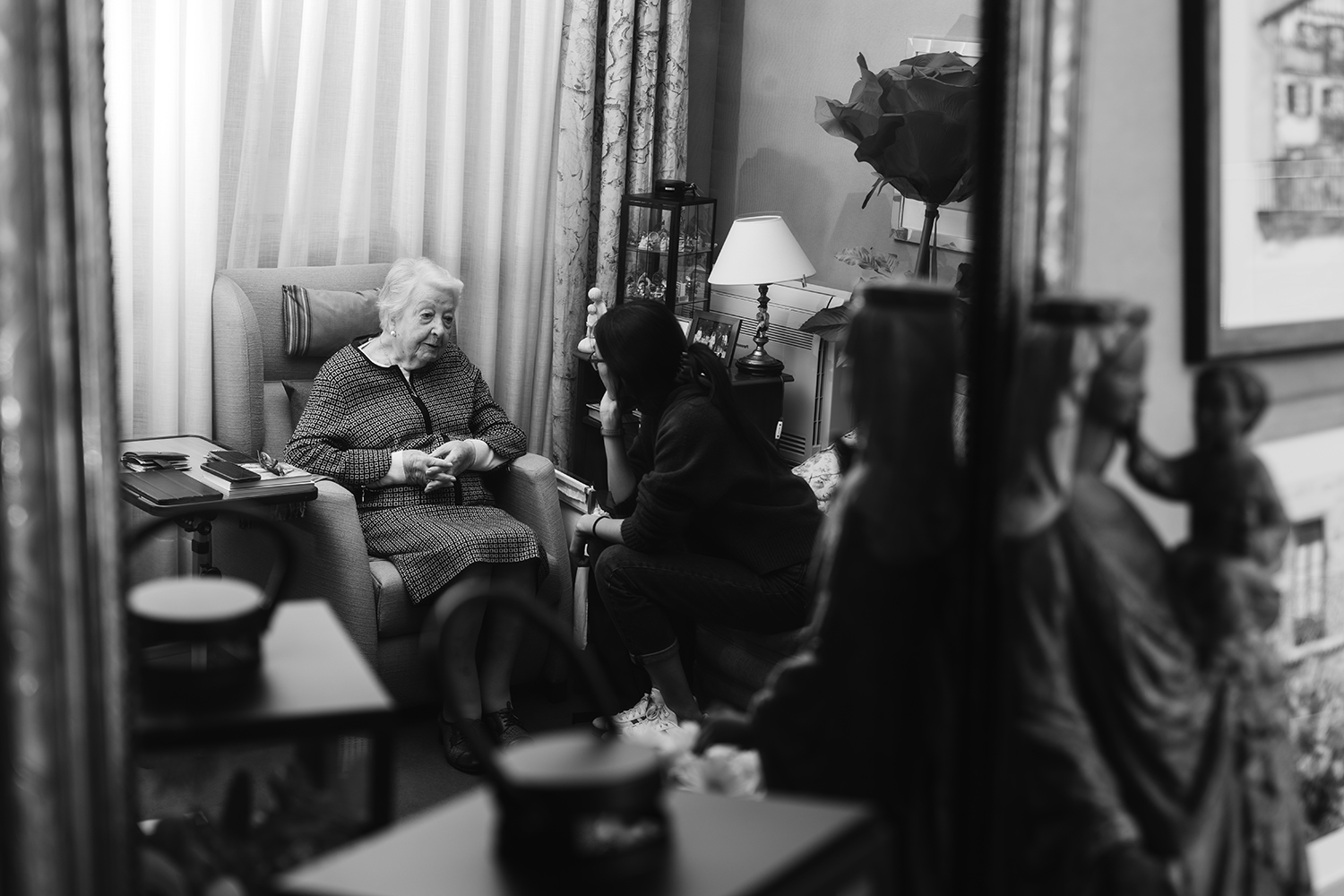
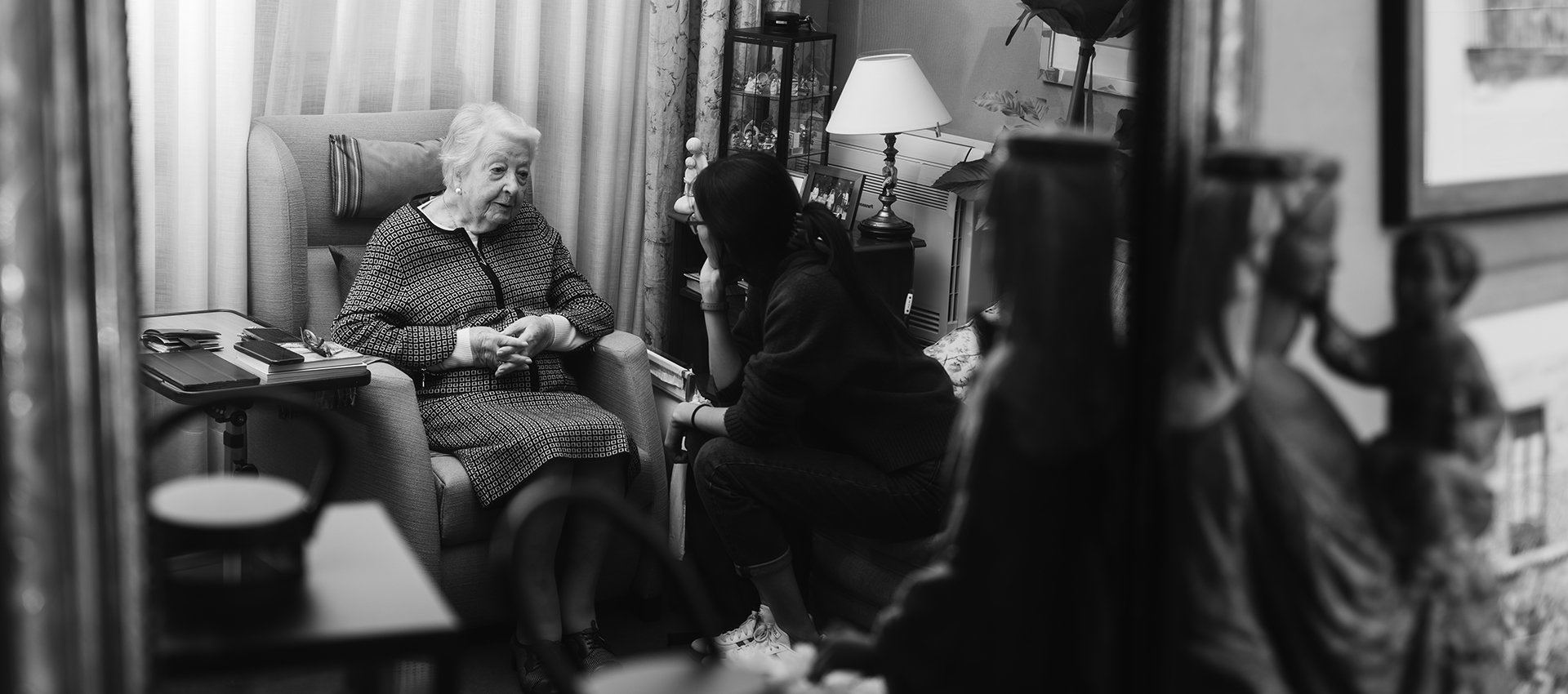
Carmen's home, located in the heart of Pamplona's Ensanche district, reflects the calm and warmth of a place where a long life has unfolded. Sitting in her favourite armchair is the first participant in the BIOANCIENT project. Carmen is 100 years old, although it is difficult to believe. Her voice retains a remarkable strength, and her lively eyes seem to defy the passage of time. “Oh, my dear boys” or “how lovely they are,” she says with the natural ease of someone who has never sought attention for herself.
It is not easy to summarise a century of life. Born in Palencia, she moved to Pamplona/Iruña with her parents at an early age. She was among the few women of her generation to pursue higher education away from home, studying in Zaragoza and Madrid at a time when this was still uncommon for women. She fondly recalls strolling through Plaza del Castillo with a group of friends they nicknamed “the witches,” sharing laughter and confidences. It was on one of those walks that she met Miguel, her future husband, with whom she enjoyed what she describes as “a marriage deeply in love.” Even today, speaking about him moves her emotionally.
Family has always been the centre of her life. She is the mother of 13 children, grandmother to 55 grandchildren, and great-grandmother to 101 great-grandchildren, the youngest of whom was born only a few days ago. Asked how she managed to raise such a large family, her answer is simple: “You have to give each child what they need and help them develop their potential.” She sums up the philosophy that guided her parenting with a phrase she still remembers fondly: “I made tunics with sleeves for all of them.”
Carmen accepts the challenges of ageing with serenity. She lives with dysphagia, which means she must eat puréed foods that, she admits, “are not as tasty as regular food.” She uses a walking frame, although she still protests when her son encourages her to rely on it more often around the house. Her greatest passion remains reading. She enjoys novels, essays, and, in recent years, biographies of Popes. She also uses a tablet and smartphone, “with patience,” mainly to view photos and listen to messages from family members spread across the world, but also to follow the occasional podcast.
When asked whether she would like to live another hundred years, she reflects for a moment before answering: “Every day that dawns is a gift. But without my children... no.” She would not want to live in a world in which her children were no longer by her side.
With the same generosity that characterises the way she speaks about her family, Carmen has agreed to participate in the BIOANCIENT project. To support the research, she has completed interviews, undergone assessments, and donated biological samples that will help advance scientific understanding of human longevity.