
Translational Medical Oncology Unit Identifies a Key Biomarker to Predict Resistance to Immunotherapy in Lung Cancer Patients with High PD-L1 Levels
The study describes the underlying molecular alterations and offers more effective therapeutic options.
Professionals from Navarrabiomed’s Translational Medical Oncology Unit Identify a New Biomarker Capable of Predicting Resistance to Immunotherapy in Lung Cancer Patients with High PD-L1 Levels. This discovery provides a better understanding of the underlying molecular alterations that drive resistance and opens the door to new therapeutic strategies to overcome it.
The findings, recently published in the Translational Oncology Journal, are part of a broader research project led by Hugo Arasanz, Co-Principal Investigator of the Translational Medical Oncology Unit at Navarrabiomed and medical oncologist at the University Hospital of Navarra. The study also forms part of the doctoral research of Natalia Castro, a predoctoral researcher in the unit and currently a medical oncologist at the University of Navarra Clinic. In addition, the team from Navarrabiomed’s Oncoimmunology Unit played an active role in the study.
Research details
Lung cancer is the leading cause of cancer-related mortality worldwide, and treatment options vary according to tumoral PD-L1 expression. In patients with metastatic disease, which is the most common stage at diagnosis, immunotherapy is the standard treatment when PD-L1 expression is high. Conversely, when PD-L1 expression is low, immunotherapy must be combined with chemotherapy.
However, approximately half of patients with high PD-L1 expression do not respond to immunotherapy, and until now the underlying mechanisms responsible for this resistance remained largely unknown.
The Navarrabiomed team has identified a specific population of immune cells circulating in the bloodstream, known as low-density neutrophils (LDNs), as being responsible for this resistance. Elevated levels of these cells act as a biomarker predicting a poorer response to immunotherapy. Importantly, the study demonstrates that these same patients can benefit from a combination of chemotherapy and immunotherapy, making it possible to overcome this initial resistance.
This finding has significant clinical implications, as it could enable treatment to be tailored from the outset according to each patient’s profile, potentially improving clinical outcomes. Specifically, patients with high PD-L1 expression who also present elevated levels of low-density neutrophils could be treated with chemoimmunotherapy, thereby reversing their initial resistance to treatment.
Furthermore, the technique used to detect low-density neutrophils is already available in hospitals, which would facilitate its implementation in routine clinical practice.
Funding and dissemination
This research was made possible thanks to funding and support from the Spanish Association Against Cancer (AECC) through the SEOM Grant for Translational Research Projects in Immuno-Oncology 2023 and the AECC Junior Clinical Fellowship 2019, as well as from the Government of Navarra through the Government of Navarra Intensification Grant 2024.
In addition to the aforementioned publication, the results have already been presented at five international and three national oncology conferences of recognized relevance.
The professionals of the Translational Medical Oncology Unit are currently seeking additional funding to validate these findings through a prospective randomized clinical trial. In parallel, they also plan to assess the results within ongoing international clinical trials.
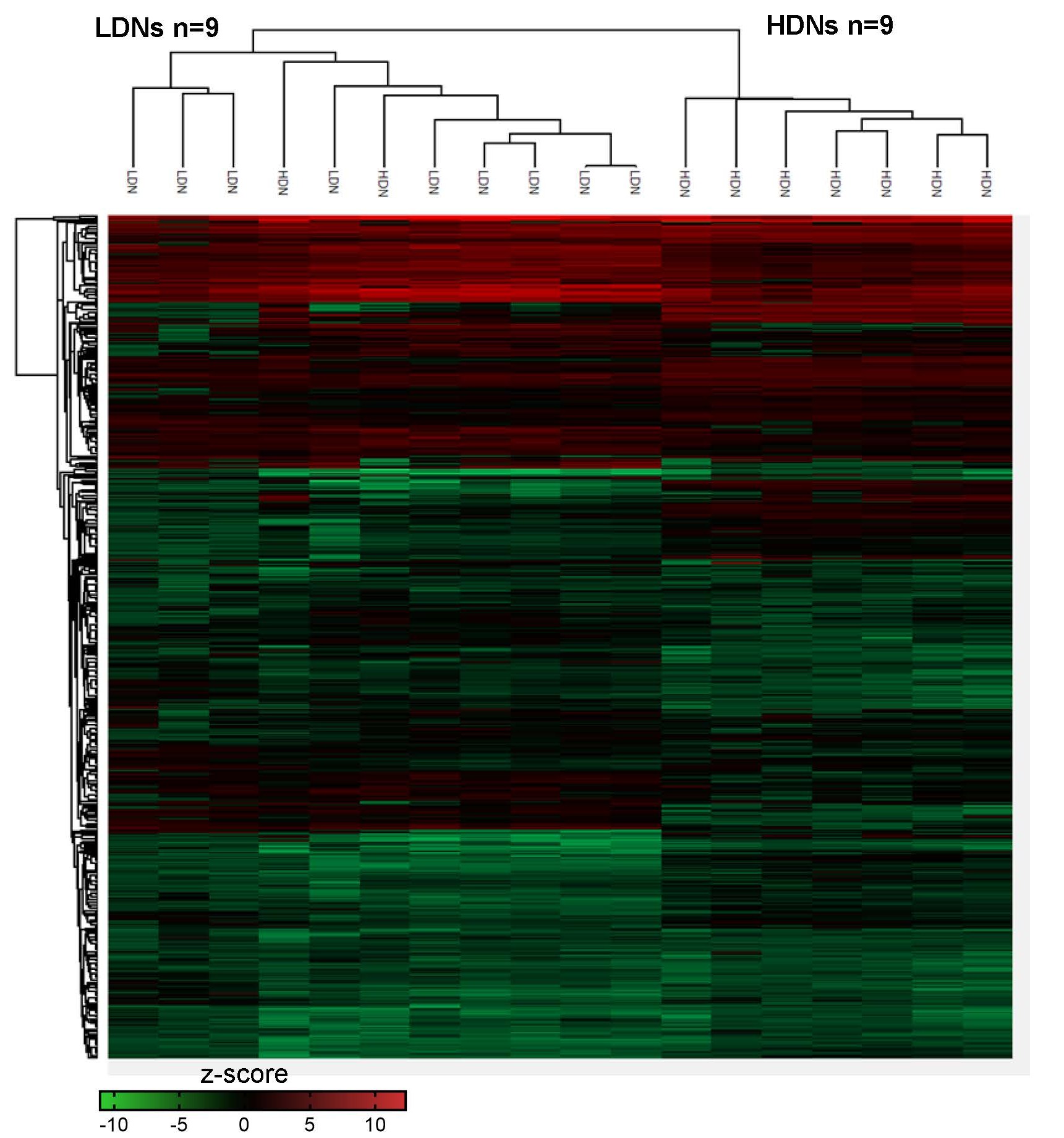
Figure 1: Heat map representing the complete proteome identified in low-density neutrophils (LDNs) (n = 9) compared with high-density neutrophils (HDNs) (n = 9), showing overexpressed proteins (red) and underexpressed proteins (green), ranging from a z-score of −11.28 (green) to +12.83 (red).
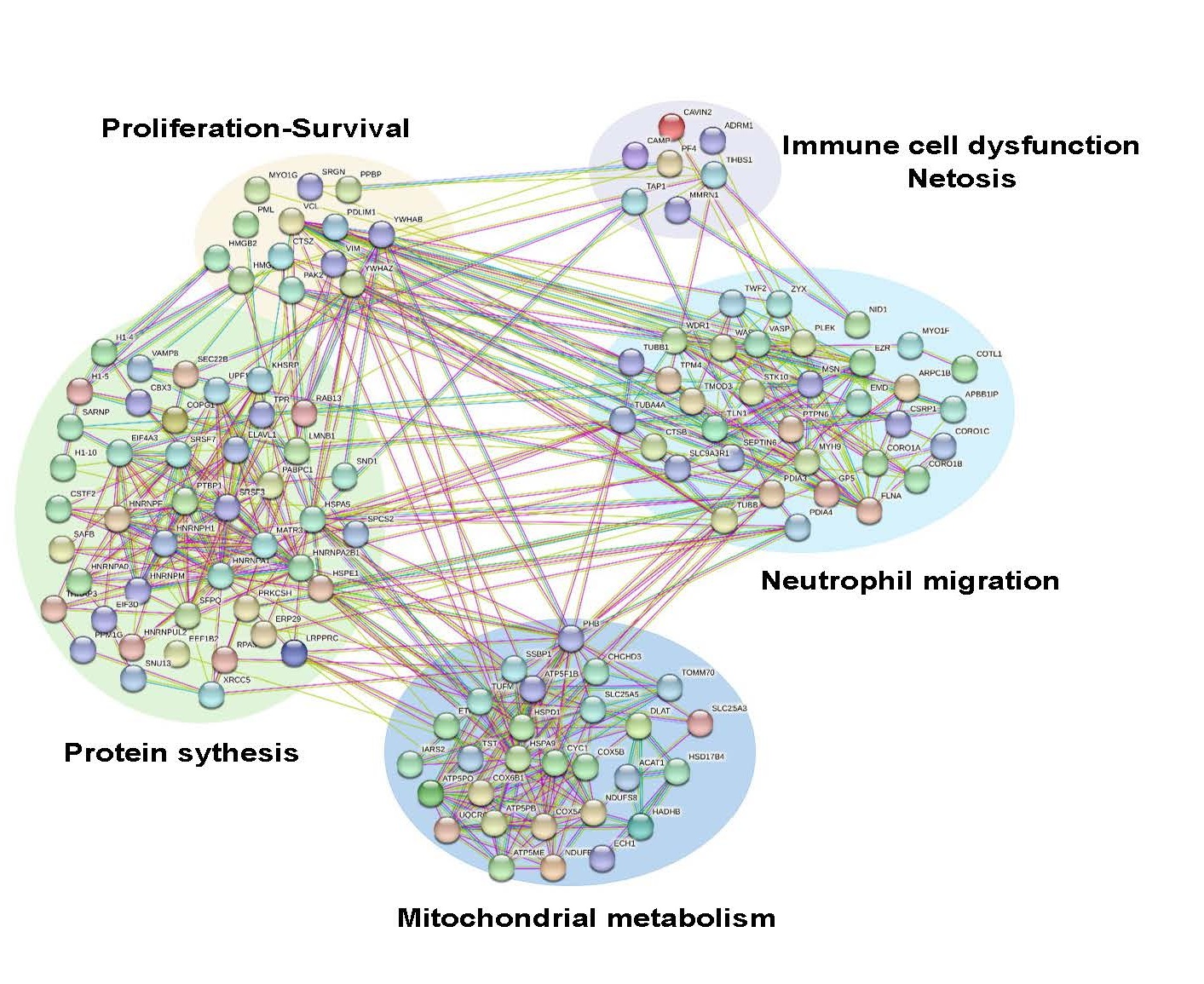
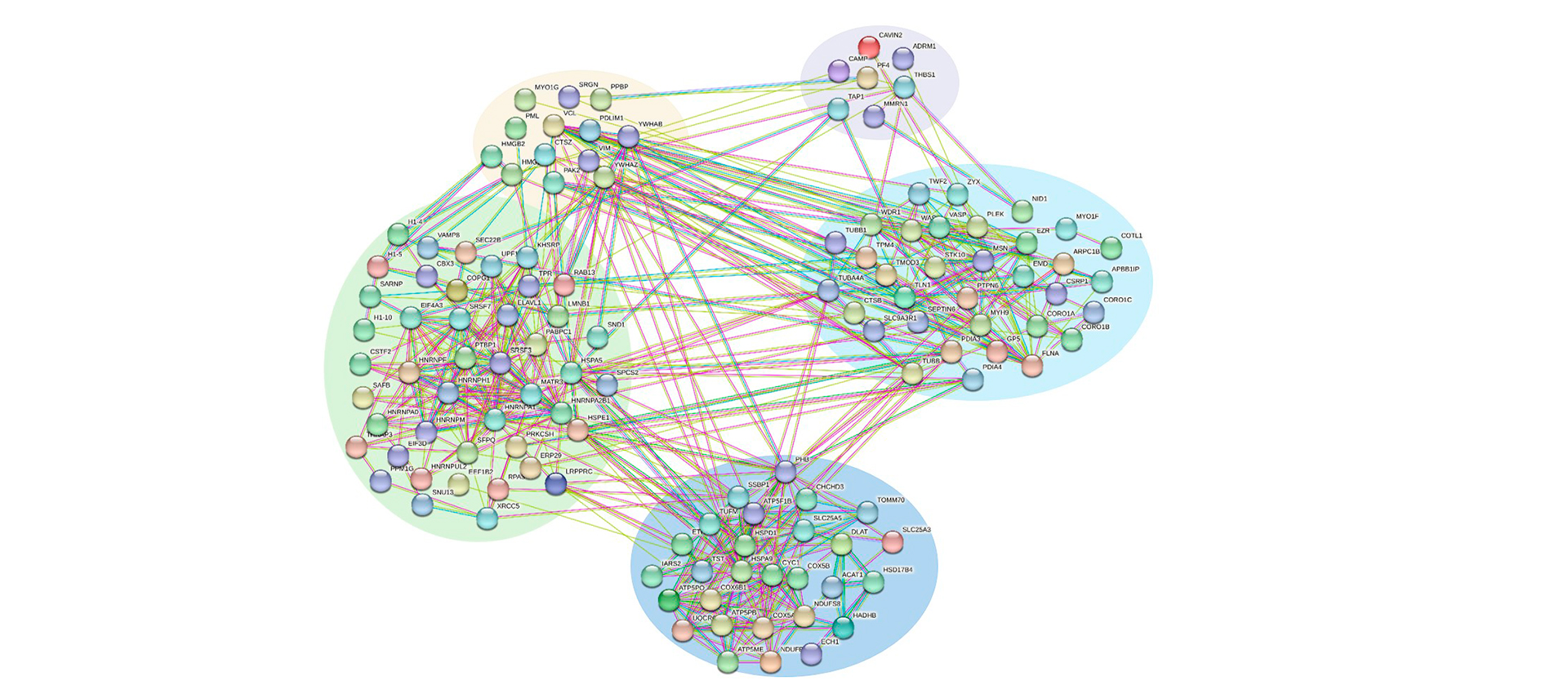
Figure 2: Subgroups of proteins overexpressed in low-density neutrophils (LDNs) compared with high-density neutrophils (HDNs), organized according to functionality and interactions. Functional interactomes representing proteins overexpressed in LDNs compared with HDNs, grouped by biological function.