
Primary Care Professionals and UPNA Seek to Improve Skills in Children and Adolescents with Autism and Intellectual Disabilities
The research project, managed by Navarrabiomed-Miguel Servet Foundation, is evaluating the use of immersive and interactive technologies to enhance communication and social relationships in this population.
A pioneering project in Navarre led by the Public University of Navarre (UPNA) and Primary Care professionals aims to improve the social and communication skills of children and adolescents with Autism Spectrum Disorder (ASD) and intellectual disabilities. The research, managed by Navarrabiomed-Miguel Servet Foundation, is assessing the use of immersive and interactive technologies to support the development of these abilities in young people.
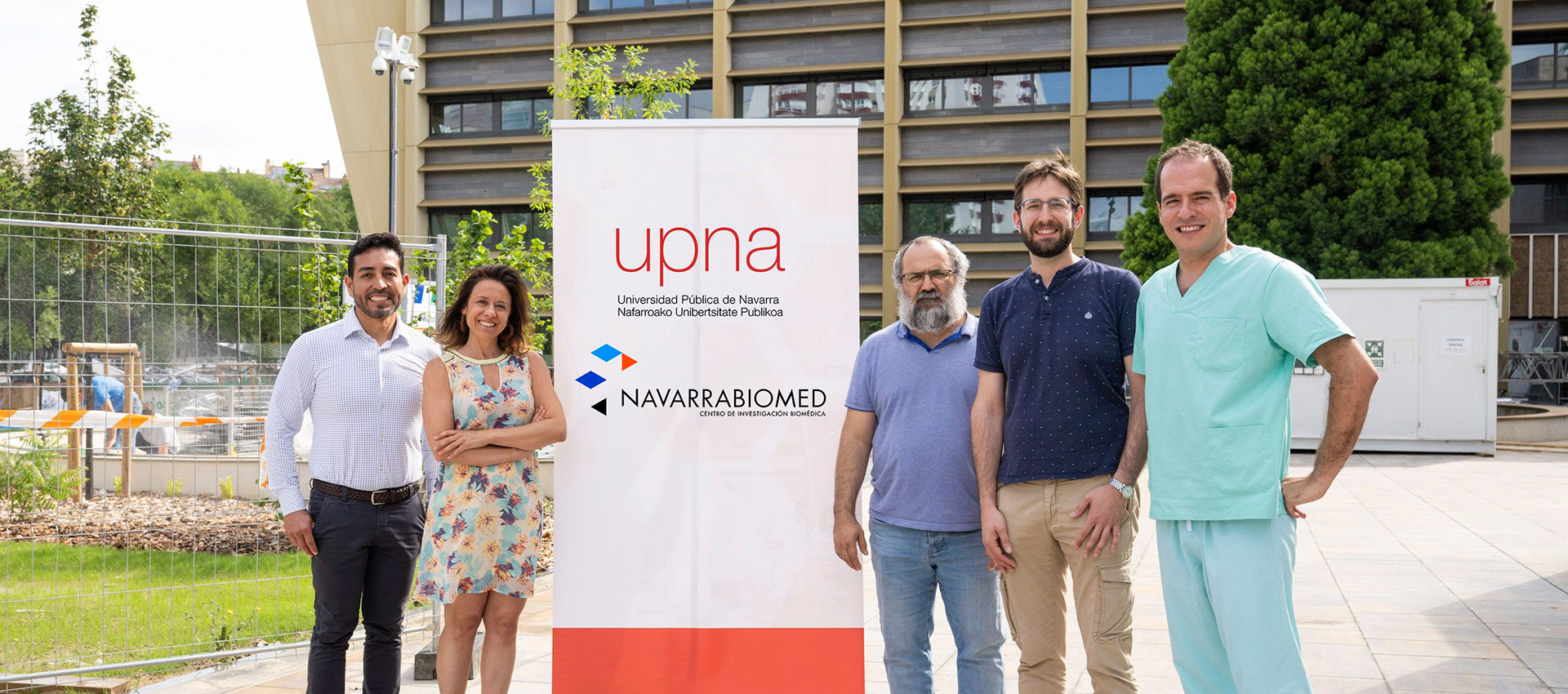
The project is led by Alcibíades Segundo Díaz Vera, a Primary Care physician with the Navarre Health Service at the Elizondo Health Centre and an associate clinical lecturer in the UPNA Department of Preventive Medicine and Public Health. The study is being conducted by a multidisciplinary team bringing together experts in health sciences, psychology, engineering, and artificial intelligence from five different institutions.
At UPNA, in addition to the principal investigator, the research team includes Almudena Sánchez Villegas, Professor in the Department of Preventive Medicine and Public Health and Dean of the Faculty of Health Sciences; Gonzalo Luis Alonso Salinas, cardiologist at the University Hospital of Navarre (HUN) and associate clinical lecturer in Cardiology; and Cédric Marco Detchart, lecturer in Artificial Intelligence and Computer Science at UPNA and researcher at the Institute of Smart Cities (ISC). The team also includes Leyre Adrián Arrieta, physician at the Navarre Health Service (SNS-O).
The project further benefits from the collaboration of Jaime Andrés Rincón Arango, Professor of Computer Science and Artificial Intelligence and member of the Applied Computational Intelligence Group (GICAP) at the University of Burgos, and Enrique Rodilla Sala, Associate Professor at CEU Cardenal Herrera University (Castellón campus). The technological development and adaptation of the digital tool used in the study are being carried out by the Jaume I University of Castellón through its Interactive Visualization Centre (CEVI) research group. The team includes Cristina Rebollo Santamaría, Assistant Professor; Anna Tonda Ramos, Associate Professor; and Inmaculada Remolar Quintana, Full Professor and Director of the CEVI group. All three researchers specialize in interactive technologies and their application in educational and healthcare settings.
Immersive Technologies Applied to Neurodevelopment
The REVIDITEA project is exploring the potential of an interactive application based on immersive and interactive technologies as a tool for training social and communication skills in children and adolescents with ASD and intellectual disabilities. The application has been developed in collaboration with the CEVI group at Jaume I University, and the study evaluating its effectiveness will be carried out in participating educational and healthcare centres.
According to Alcibíades Segundo Díaz, the project aims to “contribute to improving the quality of life and social inclusion of children and adolescents with ASD and intellectual disabilities through innovative, scalable, evidence-based tools, with the potential for future integration into educational and healthcare programmes.” The initiative also seeks to strengthen collaboration between the university, healthcare, and education sectors in Navarre, addressing real needs within the population and promoting the development of practical, research-based solutions.